
Why a museum just signed these memoranda with the state
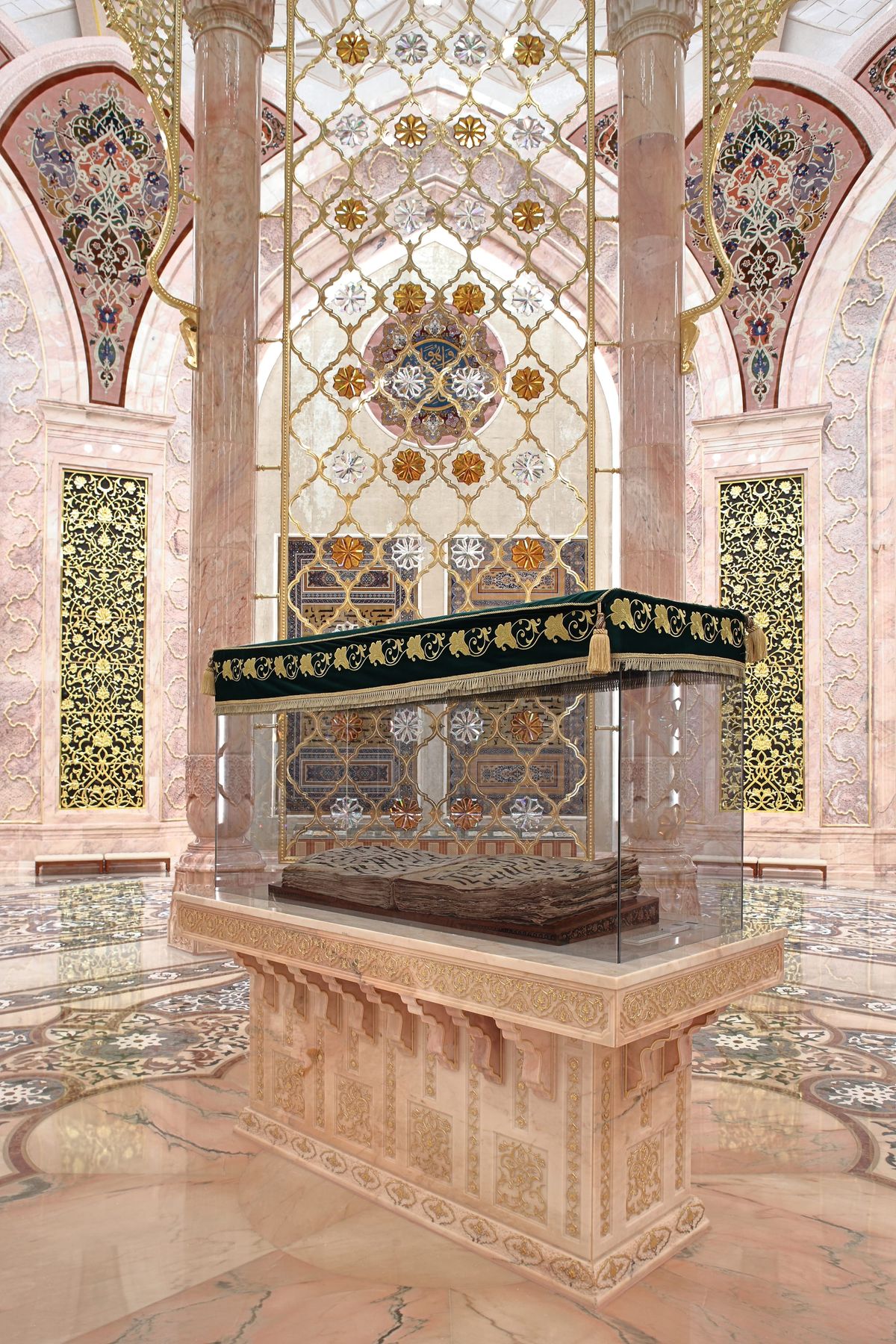
Two memoranda were signed at the Centre this week, and on paper they read like routine government paperwork. The Islamic Civilization Center agreed a cooperation framework with Uzbekistan's Committee on Interethnic Relations and Compatriots Abroad, signed by the Centre's director, Firdavs Abdukhalikov, and the Committee's chairman, Kakhraman Sariev. A second agreement, between the same Committee and the National Center for Human Rights, was signed by Sariev and the Center's director, Akmal Saidov. Stated purpose: joint projects on interethnic harmony, religious tolerance, human rights protection, and spreading Uzbekistan's cultural heritage internationally.
The natural question is why a heritage museum needs a formal agreement with either institution at all. A gallery of manuscripts and an interethnic-relations committee do not obviously share a caseload.
The country the Centre is describing
The answer is in what Uzbekistan actually looks like demographically, and in what the Centre's exhibitions are arguing about it. More than 130 nations and nationalities live in the country, organised in part around 138 national cultural centres and 34 friendship societies — infrastructure built specifically to manage a plural, multi-ethnic society. The Centre's own exhibitions tell a version of the same story on a longer timeline: that the region's Islamic civilisation was never a single, uniform tradition, but a centuries-long meeting point of peoples, scholars and trade routes.
Read that way, the Committee on Interethnic Relations and the Centre aren't adjacent institutions being awkwardly paired. They're making the same argument through different means — one through cultural-heritage exhibitions, the other through present-day minority policy. The memorandum formalises what was already true: the Centre's curatorial thesis and the state's interethnic-relations policy are versions of the same claim about pluralism, made in different centuries.
Where human rights fit
The National Centre for Human Rights is a further step along the same line, not a separate one. If the Centre's argument is that historical Islamic civilisation in the region was defined by religious tolerance and coexistence, a formal link to the body responsible for protecting rights and freedoms today is less a stretch than a continuity — the Centre supplying the historical case, the National Centre the present-day institutional guarantee.
Comments ()